Hi-Low Predictions
Built as a probability exercise first and a game second. It shows the whole suit with Ace at one and King at thirteen before you start, which no other card entry bothers to do.
Opens transum.org in a new tab.
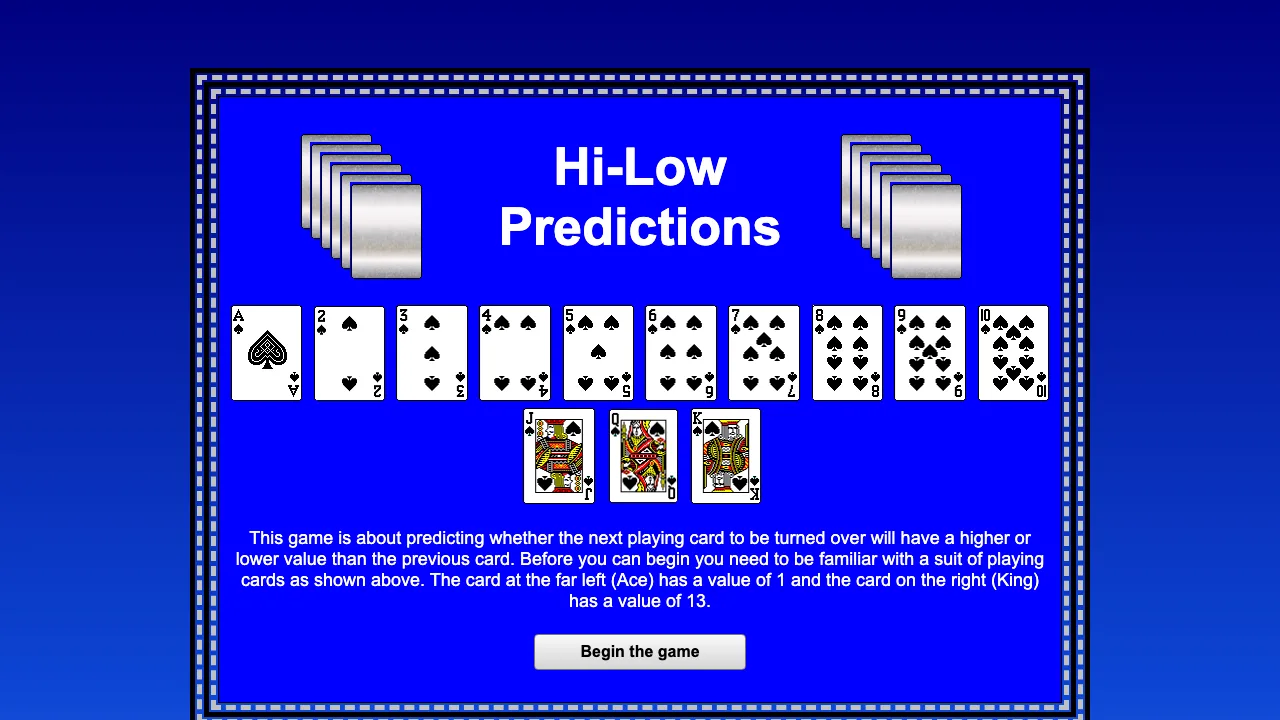
Loads transum.org in this page. Nothing from that site loads until you press play.
The facts
- Type
- Game
- Platform
- Transum
- Topics
- Card and Party, Kids and Math
- Play modes
- Classroom
- Account
- Optional login
- Price
- Free to play
- Data type
- No dataset
- Data date
- Not published
- Mobile
- Good
- Ads
- Light
Last checked by a person on August 23, 2026.
Where the numbers come from
A standard playing card suit; there is no external dataset
This game has no external dataset, so its content does not go out of date.
Teaching first
Before you can begin you need to be familiar with a suit of playing cards as shown above. The card at the far left (Ace) has a value of 1 and the card on the right (King) has a value of 13.
Every other card game in this directory assumes you know that. For a class of ten-year-olds, or for anyone who did not grow up around card games, that assumption quietly breaks the exercise — a student who is unsure whether a Jack beats a nine is not practising probability, they are guessing about card ranks.
Showing the suit and its values first fixes that in one screen, and it is the reason this listing sits alongside the more polished card games rather than below them.
What it is for
Transum is a maths resource site aimed at teachers, and this exercise lives inside its probability topic rather than in a games section. The framing throughout is prediction — what is likely, given what you can see — rather than winning a streak.
That makes it dry if you came for entertainment and exactly right if you came for a lesson.
Limits
A single suit rather than a full deck, so the card-counting element is thinner than BrainBashers’ 52-card version. Two advertising networks load. And the tracking features that make it useful to a teacher require an account, though the exercise itself does not.
Verdict in detail
What works
- Displays the full suit and its values before play, so nothing is assumed about card knowledge
- Written for teachers, and sits inside a structured probability topic
- The framing is explicitly about prediction rather than luck, which is the right lesson
- Free to use without an account, though teachers can create one for tracking
What does not
- Two advertising networks on the page
- Deliberately plain — students expecting a game will find it dry
- Single suit rather than a full deck, which limits the counting exercise
- The teacher features that make it valuable need an account
Best for
- Maths teachers
- Probability topics
- Students new to card values
Similar games
Comparable games from other developers, so you can see how this one stacks up rather than taking our word for it.
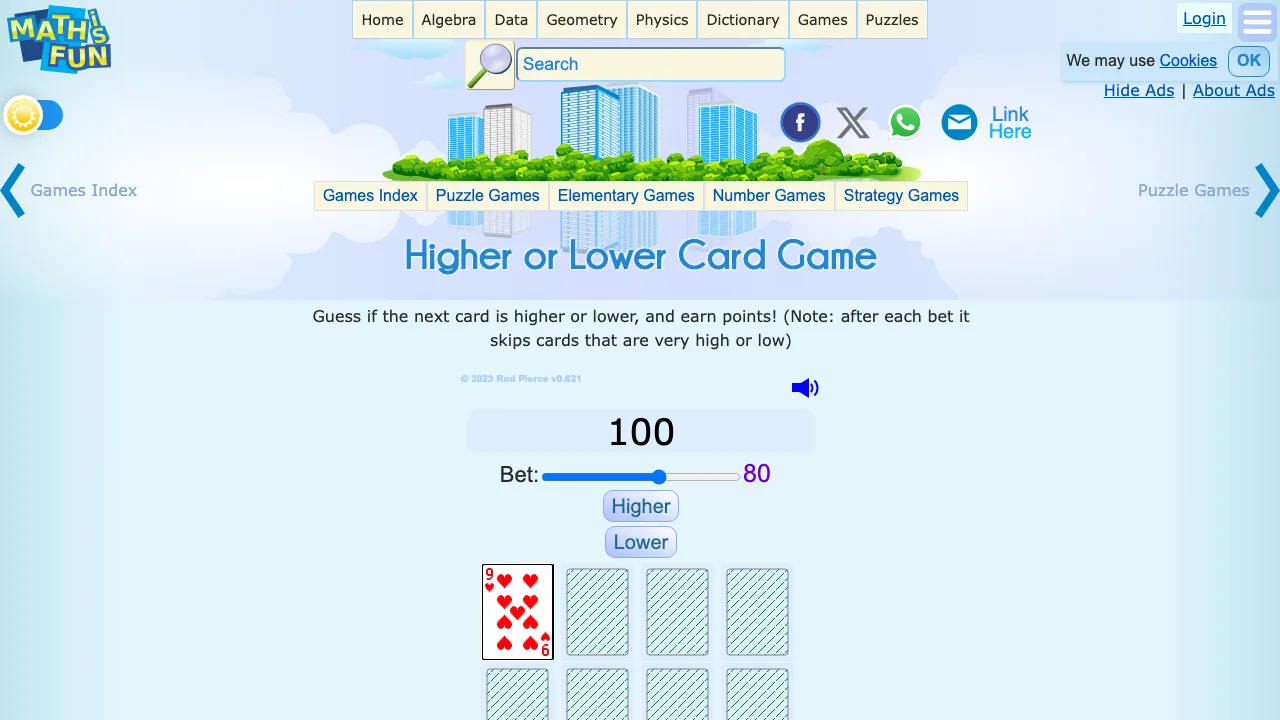
Adds betting to the card version and then removes the easy wins, skipping extreme cards after each bet — a small rule change that turns it into a real probability lesson.
Math is Fun
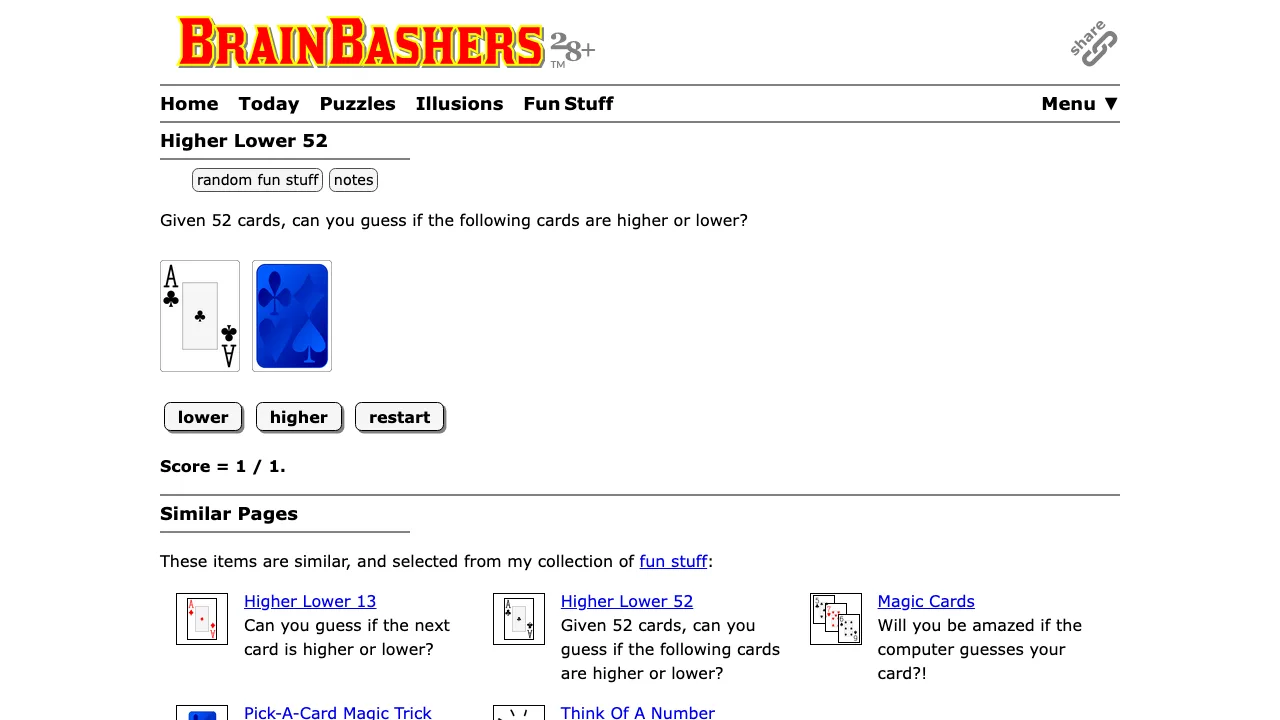
The pure form of the game: a real deck, no trivia, no dataset, no ads. Card counting actually works here, which makes it the only entry rewarding a genuine strategy.
BrainBashers
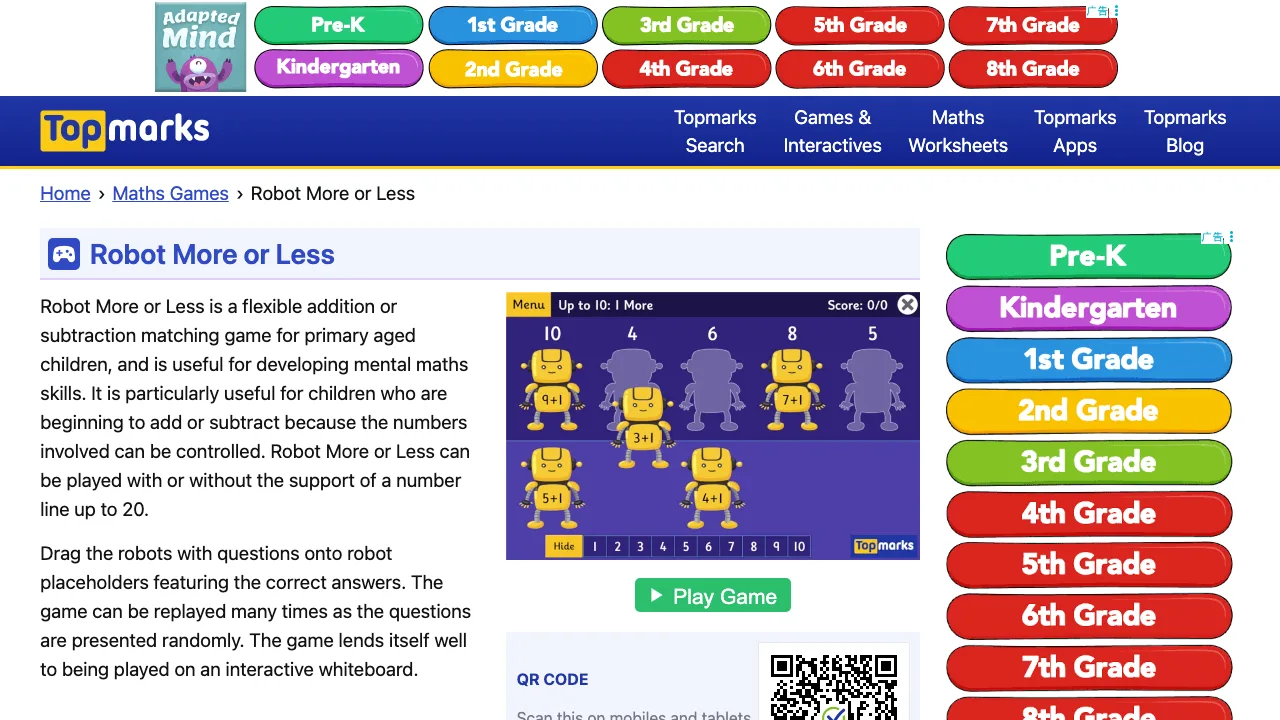
The strongest classroom entry in this category: number ranges can be controlled by the teacher, an optional number line supports children who need it, and no account is involved.
Topmarks