Higher or Lower Card Game (Math is Fun)
Adds betting to the card version and then removes the easy wins, skipping extreme cards after each bet — a small rule change that turns it into a real probability lesson.
Opens mathsisfun.com in a new tab.
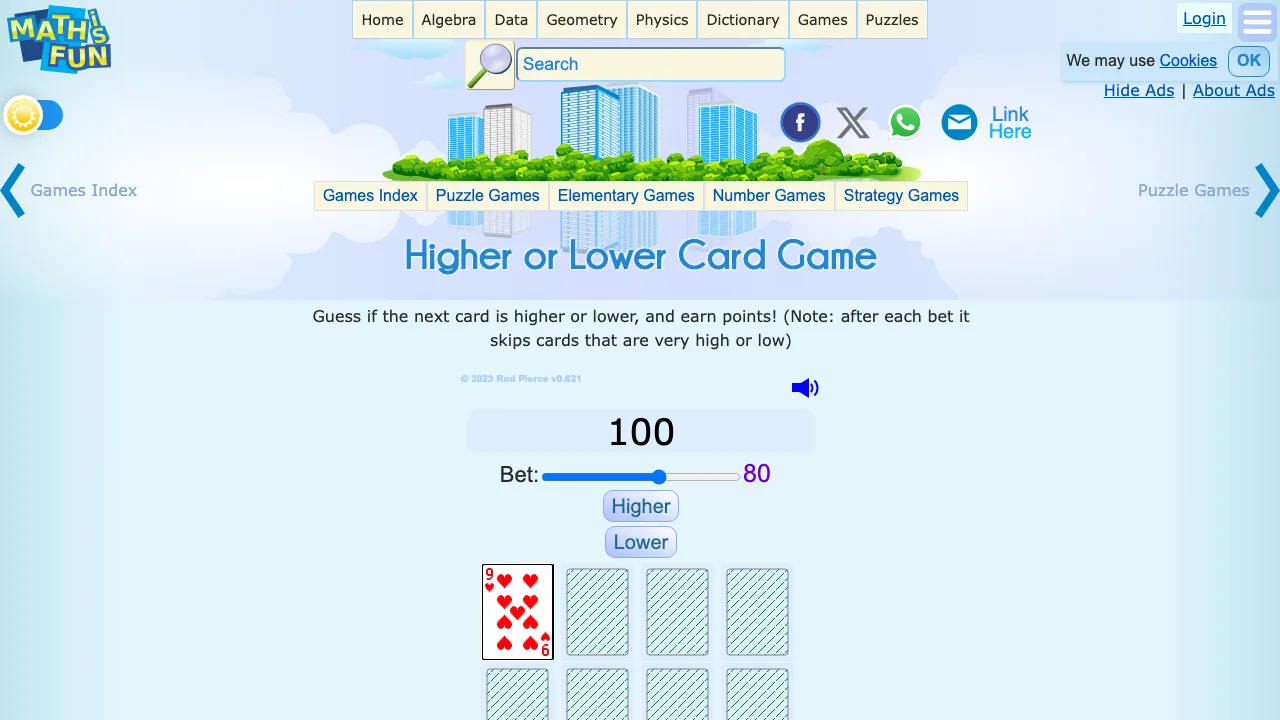
Loads mathsisfun.com in this page. Nothing from that site loads until you press play.
The facts
- Type
- Game
- Platform
- Math is Fun
- Topics
- Card and Party, Kids and Math
- Play modes
- Classroom, Endless Streak
- Account
- No login
- Price
- Free to play
- Data type
- No dataset
- Data date
- Not published
- Mobile
- Good
- Ads
- Light
Last checked by a person on August 23, 2026.
Where the numbers come from
A standard playing card deck; there is no external dataset
This game has no external dataset, so its content does not go out of date.
The rule that makes it a lesson
Note: after each bet it skips cards that are very high or very low.
That parenthetical is doing more teaching than most educational games manage in a whole session.
In a plain higher-or-lower card game, an Ace or a King hands you a free correct answer — there is nothing below one or above the other. Removing those cases forces every call into the middle of the distribution, where you actually have to reason about how many cards beat the one in front of you.
Combined with the betting layer, that makes this a working exercise in expected value rather than a guessing game with a scoreboard.
Classroom fit
Math is Fun is an established maths reference site, so the game sits next to explanations of the underlying probability rather than on its own. For a teacher that is the real advantage: the game and the concept live in the same place.
Two advertising networks load. The site offers a paid ad-free option for schools that need one.
Compared with the alternatives
BrainBashers gives you the full 52-card deck and no ads, which is better for pure card counting. This one is better for teaching expected value, because the betting forces a decision about how confident you are rather than just which way to call.
Transum’s version sits between the two, and is the most explicitly lesson-shaped of the three.
Verdict in detail
What works
- Explicitly states that it skips very high and very low cards after each bet, which removes free wins
- Betting points on each call makes the probability judgement carry consequences
- Sits on an established maths education site with a full curriculum around it
- No account needed, and the rule is explained before you play
What does not
- Two advertising networks, though the site offers a paid ad-free option
- The betting layer makes it slower than a plain card version
- Presentation is functional rather than engaging for older students
- No progress tracking, so a teacher cannot see what a class actually did
Best for
- Probability lessons
- Classroom maths
- Students learning about expected value
Similar games
Comparable games from other developers, so you can see how this one stacks up rather than taking our word for it.
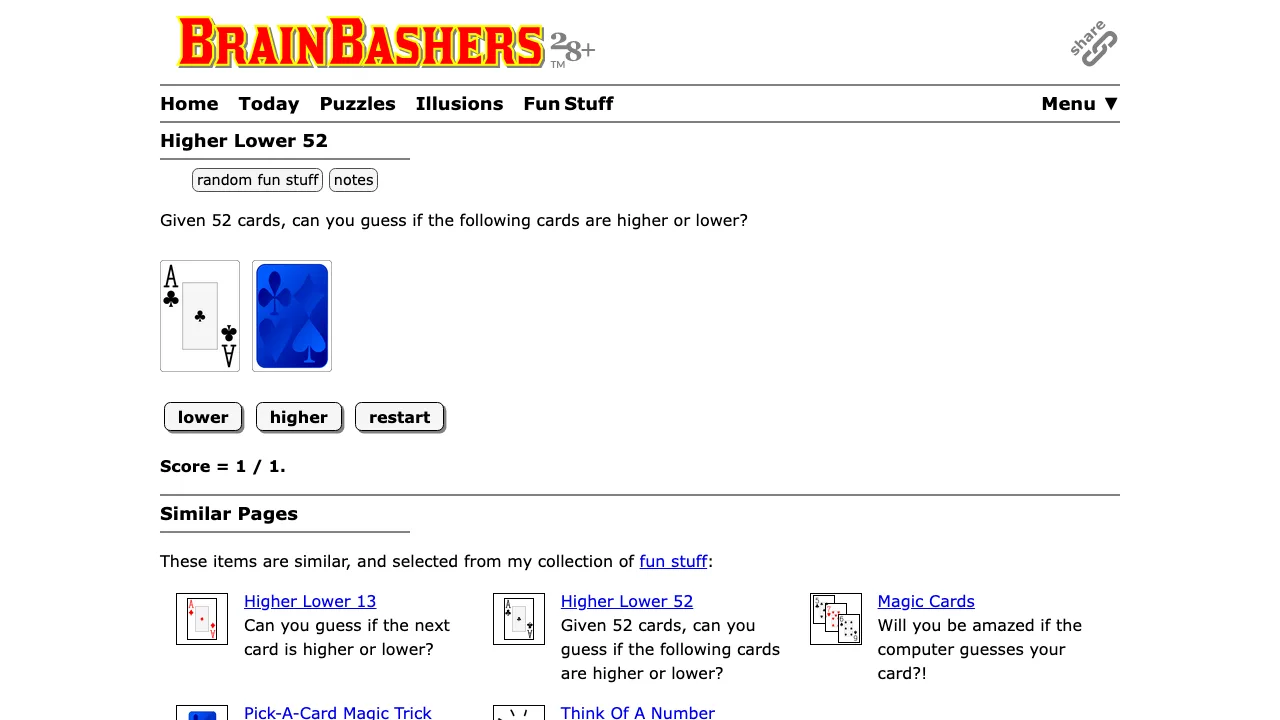
The pure form of the game: a real deck, no trivia, no dataset, no ads. Card counting actually works here, which makes it the only entry rewarding a genuine strategy.
BrainBashers
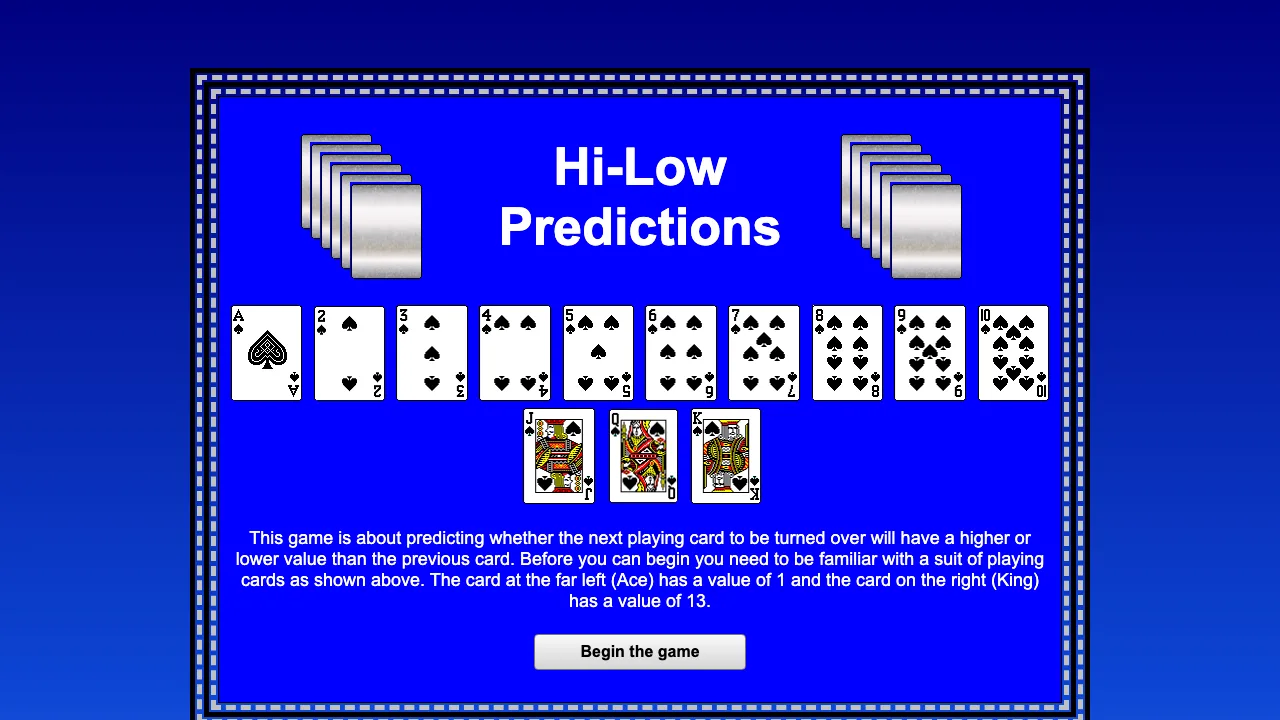
Built as a probability exercise first and a game second. It shows the whole suit with Ace at one and King at thirteen before you start, which no other card entry bothers to do.
Transum
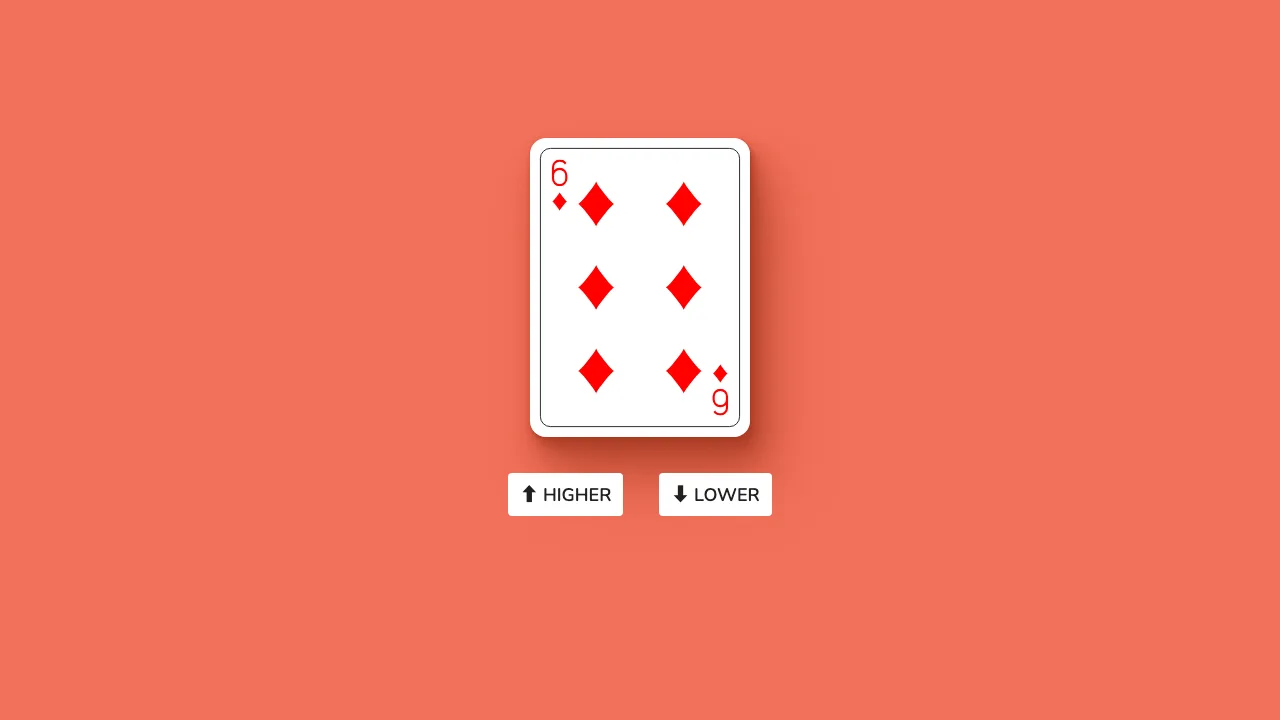
Two buttons and a card, with no advertising and nothing else whatsoever. Admirably direct, and so minimal that the page tells you almost nothing before you click.
higherlowercardgame.com